A Starter Smells Sharp: Reading Aroma Without Panic
A sharp, sour or solvent-like aroma can reflect an empty starter, but some changes call for closer inspection. Learn what to smell, what to look for and when to discard it.
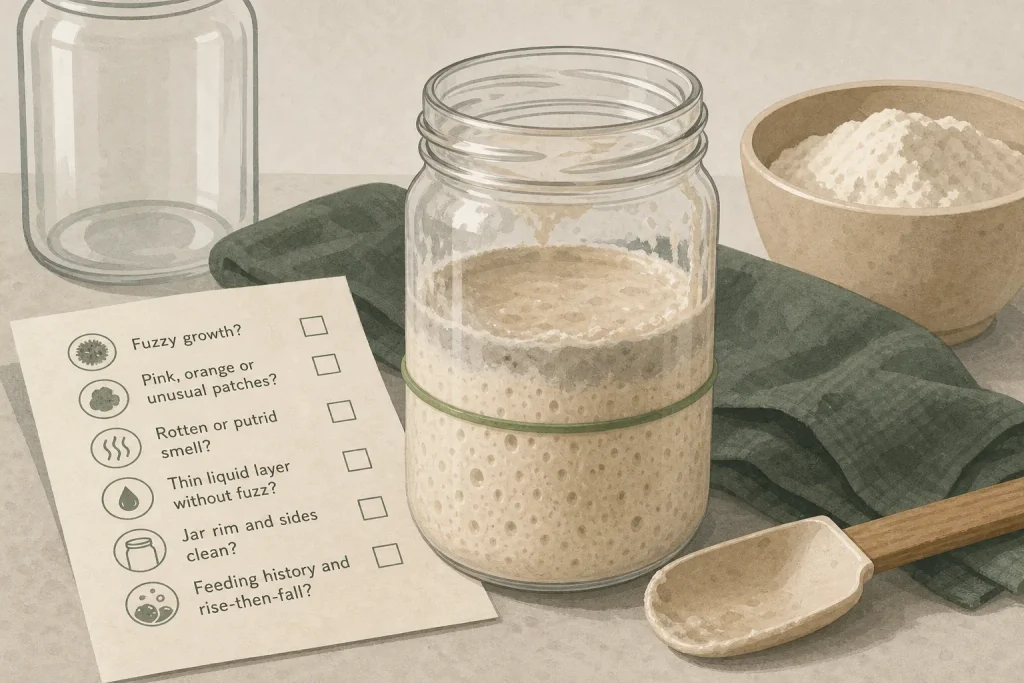
A sourdough starter that smells sharply of vinegar or nail-polish remover needs an inspection, not a taste test. Aroma alone cannot establish whether it is safe to use, so check the surface, the jar and the starter’s feeding history before deciding what to do.
What can a normal starter smell like?
A starter may smell sour, fruity, yeasty or faintly like yoghurt. Its aroma can shift with the flour, room conditions and time since feeding. There is no single correct smell, and an unfamiliar aroma on its own does not identify contamination.
A layer of greyish liquid on top can form as a starter ferments. It may smell sharp or alcoholic, but that appearance is different from fuzzy growth or distinct unusual-coloured patches. Treat these as separate observations rather than relying on smell to settle the question.
Which signs mean you should discard it?
Discard the starter if you see fuzzy growth or distinct pink, orange or other unusual-coloured patches. Do not scrape off the affected area and keep the rest, and do not taste a starter with suspicious growth. Clean the jar thoroughly before starting again.
A persistent rotten or putrid smell also calls for caution, especially if it appears with unusual colour or growth. If you cannot tell whether a mark is dried flour or mould, do not guess or taste it; discard the starter. For uncertainty beyond these general signs, seek advice from a qualified food-safety professional rather than relying on an aroma description.
A thin liquid layer or a darker, dried surface is not automatically the same as mould. Look for fuzzy texture, raised growth or distinct patches that do not match the starter’s usual appearance. If you remain unsure after looking, choose the cautious option and discard it.
What should you check before refreshing it?
- Check for fuzzy growth; if present, discard the starter and clean the jar, otherwise continue inspecting without tasting.
- Check for distinct pink, orange or other unusual-coloured patches; if present, discard it, otherwise compare the surface with its usual appearance.
- Check for a persistent rotten or putrid smell; if present, discard it, otherwise consider whether the aroma is simply sharp or alcoholic.
- Check whether the surface liquid is a thin layer without fuzzy growth; if so, record that observation and inspect the rest, otherwise discard it if there are suspicious patches.
- Check the jar rim and sides for dried residue or debris; if residue is present, avoid scraping it into the starter and move the starter to a clean jar, otherwise use a clean utensil for the next feed.
- Check the recent feeding history and whether the starter rose and then fell; if it has been a while since feeding and the surface looks normal, refresh it once and observe, otherwise avoid repeated feeds as a way to mask persistent warning signs.
How can you observe a sharp-smelling starter?
If there are no visible warning signs and the smell is sour or alcoholic rather than rotten, refresh it in a clean jar with fresh flour and water, using your usual feeding routine. This does not establish that the starter is safe; discard it if suspicious growth or a persistent rotten smell appears. Keep the jar loosely covered so gas can escape while dust and debris stay out.
Mark the starter’s level with an elastic band or washable marker. Check whether it bubbles, rises and later falls. These observations help you understand its activity, but they are not a substitute for discarding it when warning signs appear.
Say your starter has a sharp vinegar smell after sitting on the counter since the previous day. You see no coloured patches or fuzzy growth, and the starter has fallen from its risen level. Move it to a clean jar with a clean utensil, feed it with fresh flour and water according to your usual routine, and mark the new level. If it bubbles and rises, note that observable change while continuing to inspect it; if foul odour or suspicious growth appears, discard it and clean the jar.
What is not worth the effort?
Repeated deep sniffing, tasting a suspect starter or trying to cover a sharp smell with extra flour will not resolve uncertainty about contamination. Do not feed it again and again to chase a mild aroma. That makes its ordinary feeding pattern harder to read and does not replace the discard criteria.
Instead, note the flour, storage place, last feeding and visible changes. Compare the starter with its own usual appearance and activity, while treating fuzzy growth, suspicious patches or a persistent rotten smell as reasons to stop.
When should you start again?
Discard a starter with fuzzy growth, distinct suspicious colour or a persistent rotten smell; clean the jar before beginning again. If the only change is a sharp or alcoholic aroma and there are no visible warning signs, a single refreshment and careful observation are reasonable, but neither smell nor renewed activity proves safety. When you cannot confidently distinguish ordinary residue from suspicious growth, discard it rather than taking a taste.
Use aroma as a prompt to inspect the starter, not as a verdict. The practical decision rests on what you can see, the smell’s character and whether concerning signs persist.
Alongside this loaf
Reading the Moves Between Turns
In an asynchronous strategy game, an opponent’s habits become visible one saved position at a time.…

Pita at the Table: The Pocket, the Puff, and the Meal
A pita pocket begins as steam trapped between quickly setting layers of dough. Follow an invented…