Why Wholegrain Dough Feels Different Under the Hand
Bran and germ change how dough absorbs water, stretches and holds together. Learn what your hands can tell you and how to adjust your handling to suit the flour.
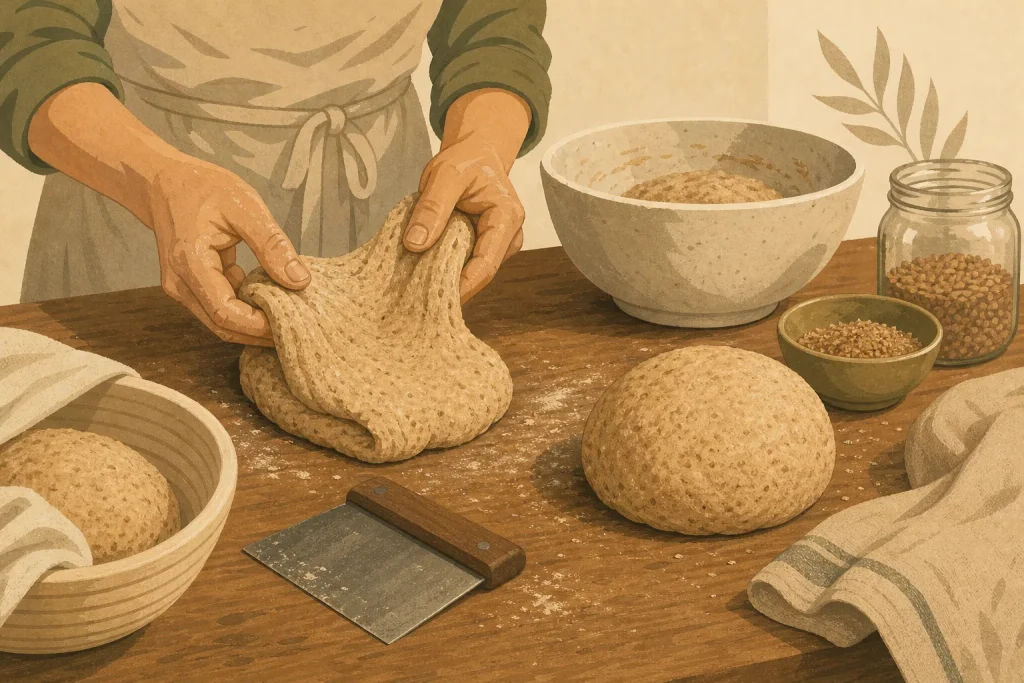
Wholegrain dough often feels rougher, firmer and less stretchy than dough made with sifted white flour, even when both begin with the same recipe. Bran and germ affect water absorption and dough structure, so use what you feel as a cue to rest, fold or adjust the mix rather than forcing it to behave like white dough.
The right response depends on the dough’s condition. A mass that feels dry at first may soften as the flour absorbs water; one that tears during shaping may need gentler handling or more rest. Check the dough at each stage before changing the recipe.
Why does wholegrain dough feel rough?
Wholegrain flour contains bran and germ as well as the starchy endosperm. Bran particles contribute texture and can take up water. The germ contains oils and other components that affect the flour’s texture and storage characteristics. The precise feel varies with the grain, the milling and the flour’s condition.
Gluten develops from proteins in the flour’s endosperm when flour and water are mixed. Bran does not simply cut through a single, continuous gluten sheet; rather, bran particles and other flour components alter how the dough’s structure develops and can make it less extensible. A wholegrain dough may therefore feel less smooth and stretch less freely than one made from sifted flour, though the result depends on the flour and how the dough is handled.
That does not mean the dough is defective. A freshly mixed mass may feel shaggy or stiff, then soften as its components take up water. It may remain visibly textured while still being cohesive and workable.
If the dough feels dry right after mixing, what fits?
Choose patience first if the dough is rough but holds together and no loose flour remains in the bowl. Cover it and let it rest before deciding to add water. This gives the flour more time to absorb moisture and makes the dough easier to assess without changing the recipe.
After the rest, press a fingertip into the dough or lift an edge. If it feels more supple and the surface is less ragged, continue with the planned mixing or folding. If it crumbles at the edges or breaks apart when lifted, work in a little water with damp hands, using pinching and folding rather than pouring a splash into one spot. Pause and reassess before adding more.
Different flours absorb water differently, and “wholegrain” alone does not tell you exactly how much water a dough needs. Avoid adding water just to make the surface look like white dough; too much can leave the dough slack and difficult to shape.
Say you mix a loaf with a newly opened bag of wholemeal flour and the dough feels tight and shaggy. You cover it for a rest; afterwards it holds together and stretches farther when lifted. The sensible choice is to proceed without adding water. If it still fractures at the edge, work in a little water, wait, and check again.
If the dough turns sticky, what should you do?
Choose light handling if the dough is tacky but holds its shape. Sticky does not automatically mean too wet. Wholegrain particles can make the surface feel rough and cling to fingers even when the dough has enough structure. Use a bowl scraper to release it and lightly dampen your hands for folds. Keep extra flour off the bench unless the dough is spreading and cannot be gathered.
If it spreads loosely after resting, stop adding water. Use a bowl scraper to lift an edge and fold it towards the centre; rotate the bowl and repeat until the dough is gathered. Rest it covered between handling. Gentle folds can organise the dough without the forceful kneading that may tear a rough, particle-rich mass.
Flour on the bench can help during shaping, but too much may be worked into the dough and leave dry patches or seams. Use only enough to prevent sticking. A lightly dampened work surface can help when gathering a soft dough.
If the dough tears when stretched, which approach fits?
Choose rest and gentle folds when an edge rips quickly as you lift it. The dough may need more time for its structure to develop, or the bran may reduce how far it stretches before tearing. Cover it, let it relax, and try a smaller stretch later. Do not keep pulling hard to prove that it can reach farther.
During folds, lift only until you feel resistance, then bring the dough over itself. Rotate the bowl and repeat around the mass. If the dough resists, stop rather than forcing a long stretch. Mild folds with rests between them can organise the dough while limiting tears.
If the dough feels strong but the surface splits, check whether it has dried. A dry skin can crack even when the dough beneath is supple. Keep the bowl covered and avoid leaving the dough exposed while preparing other ingredients or cleaning up.
Wholegrain dough may not form a thin, even membrane as readily as dough made from sifted flour. That appearance is not the only sign of useful structure. Notice whether the dough lifts as a connected mass, relaxes after handling and holds its shape between folds.
If the dough feels dense, should you knead more?
Choose a short rest before more kneading if the dough is compact but not crumbling. Continued force may make it feel tighter without solving the underlying issue: the flour may still be absorbing water, or the dough may need time to relax. Cover it, wait, then assess how readily it bends and folds.
If it loosens after resting, use gentle folds to organise it. If it remains firm and cracks as you fold it, work in a little water and allow it to absorb before adding more. If the dough feels elastic but springs back immediately, give it another rest rather than kneading harder.
Coarse wholegrain flour may keep a visibly textured surface throughout mixing. Do not knead until every fleck disappears. The aim is a coherent dough, not a polished one.
If you are changing flour, what should you watch?
Choose a conservative adjustment when switching between wholemeal flours, or moving from finely milled flour to coarser flour. If the recipe allows, hold back some of its water at first. Mix, rest, and decide from the dough’s feel whether the remainder is needed.
Watch the dough at several points rather than relying on one touch. Right after mixing, note whether it is cohesive or crumbly. After a rest, check whether it has softened. During folds, notice whether it stretches, resists or tears. Before shaping, see whether it holds together when lifted. These observations help distinguish a dough that needs more water from one that needs more time.
For a first bake with an unfamiliar flour, keep other changes modest. If you alter the flour, water and mixing method all at once, it becomes harder to tell which adjustment helped. Note the flour’s texture and how the dough changed after resting; that is more useful than assigning a fixed water rule to every wholegrain loaf.
Which handling habits are worth keeping?
- Cover the dough between checks. If the surface stays supple, continue assessing the dough; if it forms a dry skin, cover it and let that skin soften before stretching.
- Use a bowl scraper. If the dough releases from the bowl with scraping, gather it without extra flour; if it still smears and spreads, rest it covered and fold it together rather than adding bench flour at once.
- Rest before correcting. If the dough softens during the pause, continue without changing the liquid; if it remains crumbly, work in a little water and reassess.
- Add water gradually. If a small addition helps the dough hold together, stop and wait for it to absorb; if the dough becomes slack, add no more and handle it gently.
- Fold to the dough’s resistance. If an edge lifts without tearing, fold it over; if it resists or rips, stop, cover the dough and allow it to relax.
- Judge cohesion, not gloss. If the dough lifts as one mass and holds together, continue even if it looks rough; if it breaks apart, rest it and assess whether a little water is needed.
- Make one adjustment at a time. If a single change improves handling, keep it for the next stage; if the result worsens, stop changing other variables and return to the last workable method.
It is not worth kneading wholegrain dough until it looks perfectly smooth, or dusting the bench heavily whenever it sticks to your fingers. Both habits can work against the dough: the first encourages rough handling, and the second can leave dry patches or alter the dough. If it stays together, softens with rest and accepts gentle folds, move on to the next part of the bake even if it still feels grainy beneath your hand.