Pita at the Table: The Pocket, the Puff, and the Meal
A pita pocket begins as steam trapped between quickly setting layers of dough. Follow an invented meal from mixing and baking through serving, and see how the bread’s shape suits different ways of eating.
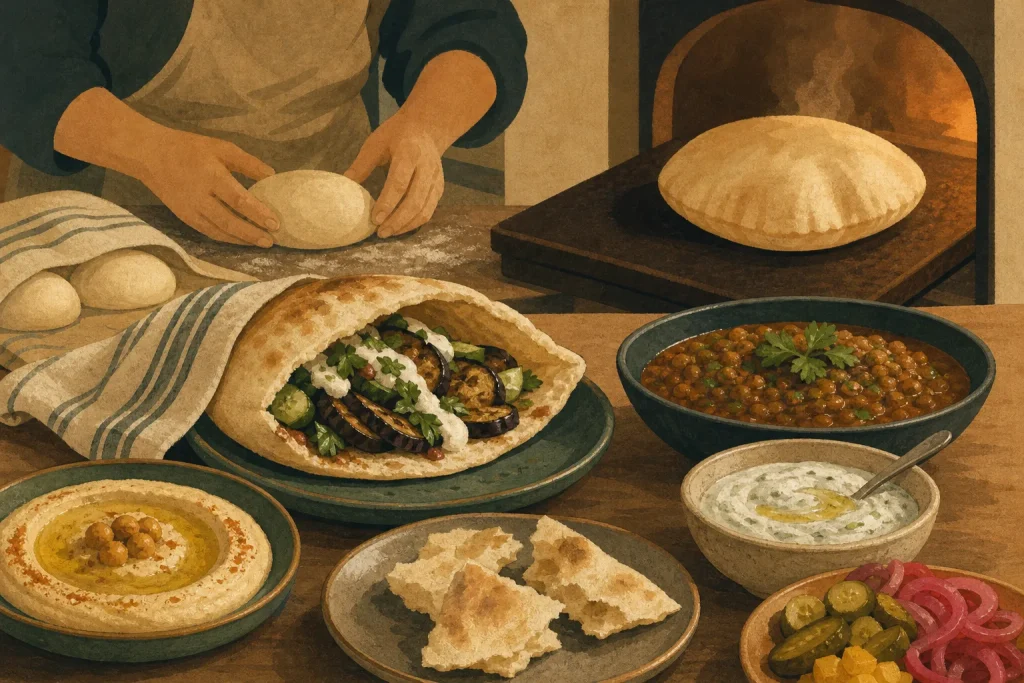
A pita’s pocket forms when a thin round of dough meets intense heat: moisture inside turns to steam, the layers separate, and the bread balloons. That puff is brief, but it changes how the bread can be served. Imagine a small household planning a meal around homemade pita. The cook wants some breads for filling, others for dipping, and a few to share alongside a saucy dish. The choices from dough to table show why a pocket is useful, but not the only measure of a good pita.
What should the dough feel like?
For this invented meal, the cook chooses a straightforward wheat dough: flour, water, yeast, salt and a little olive oil. A soft, workable dough is easier to roll thin than a stiff one. If it clings heavily to the work surface, the cook kneads it until smoother before adding more flour. Too much bench flour can leave the rounds dry and harder to roll evenly.
After mixing and kneading, the cook leaves the dough covered until it looks aerated and relaxed. Exact timing depends on room warmth and dough condition, so appearance and feel are more useful than the clock alone. A rested piece should stretch without snapping straight back. If it resists the rolling pin, the cook pauses and covers it again so it can relax.
The cook divides the dough into even pieces and shapes them into balls. Each ball rests, covered, while the work surface is cleared. This pause helps the dough roll into a round without a fight. Perfect circles are not necessary, but a lopsided round can puff unevenly, leaving one side thick and another fragile.
Why does pita puff in the oven?
The pocket depends on a quick, even burst of heat. As the dough heats, water within it becomes steam. The outer surfaces set while the interior expands, separating the two sides into a hollow space. The dough must be rolled to a reasonably even thickness and baked on a thoroughly heated surface for that expansion to happen cleanly.
For the meal, the cook heats a baking steel in the oven. A heavy baking stone or an inverted, sturdy baking tray can also provide a hot surface. The cook rolls each piece on a lightly floured counter, then transfers it carefully to the steel. Baking in manageable batches helps keep the oven temperature steady and the work controlled.
The first round puffs unevenly. In this imagined kitchen, one edge is noticeably thicker, and the bread balloons on one side but stays flat elsewhere. The cook rolls the next round more evenly and lets the steel heat again between batches. The expected visible result is a more balanced puff, though no batch needs to inflate perfectly to be edible.
Not worth the effort: chasing a flawless sphere. Even a partly puffed pita can be tender and pleasant. Look for dough that is cooked through and still flexible, rather than treating the pocket as a pass-or-fail test.
How should freshly baked pita be handled?
As each pita comes off the hot surface, the cook places it beneath a clean tea towel and stacks the breads loosely. This limits drying while they are served. The towel is for short-term holding at the table, not a way to keep filled bread or perishable leftovers safe. The cook serves the batch promptly and keeps hot fillings hot until serving.
For leftovers, the cook lets plain pita cool, then stores it covered in a clean container. Bread that will not be eaten soon is frozen while fresh and thawed when needed. Filled pita is treated differently: any portion containing yoghurt sauce, cooked meat or another perishable filling is refrigerated promptly in a covered container, rather than left at room temperature. The cook follows local food-safety advice for storage and reheating, and discards food if its safety is uncertain.
When the batch is ready, the cook separates the breads by use. The puffiest rounds are set aside for filling. A round with a weak seam or a small tear is kept whole for dipping, where a pocket is unnecessary. The best bread for a stuffed sandwich is not automatically the best bread for every place at the table.
What belongs inside a pita pocket?
For the imagined meal, the cook fills some pockets with roasted aubergine, chopped cucumber, herbs and a spoonful of yoghurt sauce. The vegetables are drained and the sauce kept modest, so the bread is less likely to become soggy or split. The cook opens a pocket gently along its edge, then adds the filling in layers instead of forcing everything in at once.
A pocket can carry falafel, grilled vegetables or seasoned meat, with pickles and sauces added to suit the meal. Keep cooked fillings properly hot until serving, and refrigerate perishable ingredients such as yoghurt sauce until they are needed. Avoid overfilling: a generous but manageable pocket is easier to eat than one under strain.
In other settings, pita may be torn and passed around rather than filled. At the table in this invented situation, the cook puts intact rounds beside lentils and a bowl of yoghurt, inviting everyone to tear off pieces. The same bread can scoop up a thick stew, accompany dips such as hummus, or sit alongside grilled food. Serving customs vary between households and communities; there is no single rule for every table.
What if the pocket does not appear?
A flat pita can still serve the meal. Use it as a soft wrap, tear it for dipping, or cut it into wedges for toasting. If repeated rounds fail to puff, consider likely causes: the baking surface may not be hot enough, the dough may have been rolled unevenly, or the rounds may have dried while waiting. Adjust one factor at a time. Covering the dough pieces and allowing the oven more time to heat are sensible places to start.
Suppose the cook’s later rounds remain flat despite careful rolling. Rather than discard them, the cook warms them briefly, folds them around the roasted vegetables and serves the remaining filling in a bowl. The visible result is different from a neat pocket, but the bread remains useful and the meal proceeds. Shape should guide serving, not dictate whether bread belongs at the table.
For a pita meal, match each bread to its job. Keep plain rounds covered while they wait, refrigerate perishable fillings, and serve hot food promptly. Reserve strong pockets for fillings and offer torn pieces for scooping or dipping. A dramatic puff makes a useful pocket, but warmth, tenderness and a place in the meal matter just as much.
Alongside this loaf
Reading the Moves Between Turns
In an asynchronous strategy game, an opponent’s habits become visible one saved position at a time.…
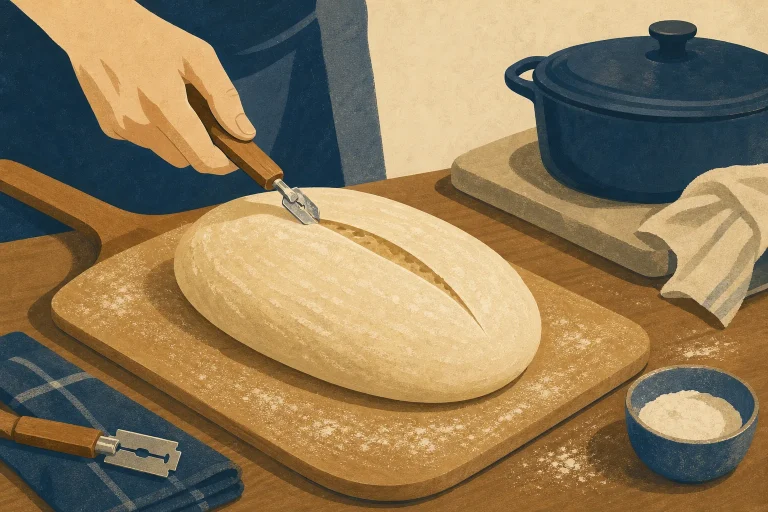
Scoring a Loaf: How Cuts Guide Expansion
A clean score gives a shaped loaf a planned place to open. Choose a cut that…